
 Image 1 of 1
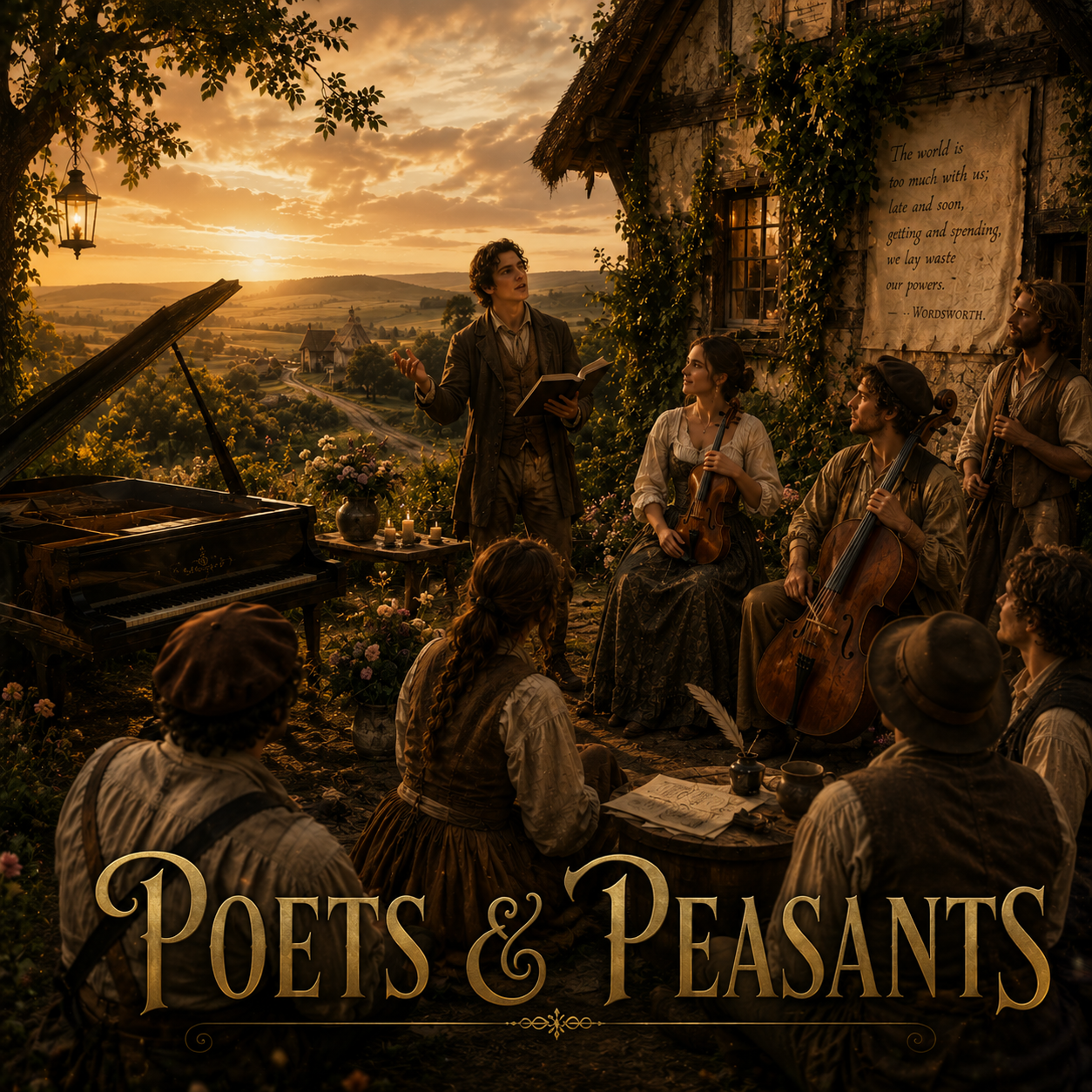
The enjoyment and creation of Beauty in art is perhaps one of the most undeniably “human” characteristics, knowing no limits of class or caste. It is no wonder that so many classical composers came from humble backgrounds, and paid homage to their roots by including folk-like modes and rhythms within their understanding of sophisticated and refined compositional techniques.
Franz Joseph Haydn was born to a wheelwright in a rural peasant village in Austria, and later worked to be a court composer for the Esterházy estate in Hungary. His “Gypsy” trio is a nod to the peasant music of Hungary, couched in Viennese form and lyricism.
Camille Saint-Saëns’ was not only a world-renowned composer, but a prolific poet and stage writer - his work “La muse et le poete,” although not strictly programmatic, conjoins these two aspects of his artistic output.
Babadjanian was the son of an Armenian folk musician, and his casting of the spontaneous, raw energy of centuries-old village folk dances into a late-Romantic style of expressivity and nuance gives his music a charming universality.
The enjoyment and creation of Beauty in art is perhaps one of the most undeniably “human” characteristics, knowing no limits of class or caste. It is no wonder that so many classical composers came from humble backgrounds, and paid homage to their roots by including folk-like modes and rhythms within their understanding of sophisticated and refined compositional techniques.
Franz Joseph Haydn was born to a wheelwright in a rural peasant village in Austria, and later worked to be a court composer for the Esterházy estate in Hungary. His “Gypsy” trio is a nod to the peasant music of Hungary, couched in Viennese form and lyricism.
Camille Saint-Saëns’ was not only a world-renowned composer, but a prolific poet and stage writer - his work “La muse et le poete,” although not strictly programmatic, conjoins these two aspects of his artistic output.
Babadjanian was the son of an Armenian folk musician, and his casting of the spontaneous, raw energy of centuries-old village folk dances into a late-Romantic style of expressivity and nuance gives his music a charming universality.